

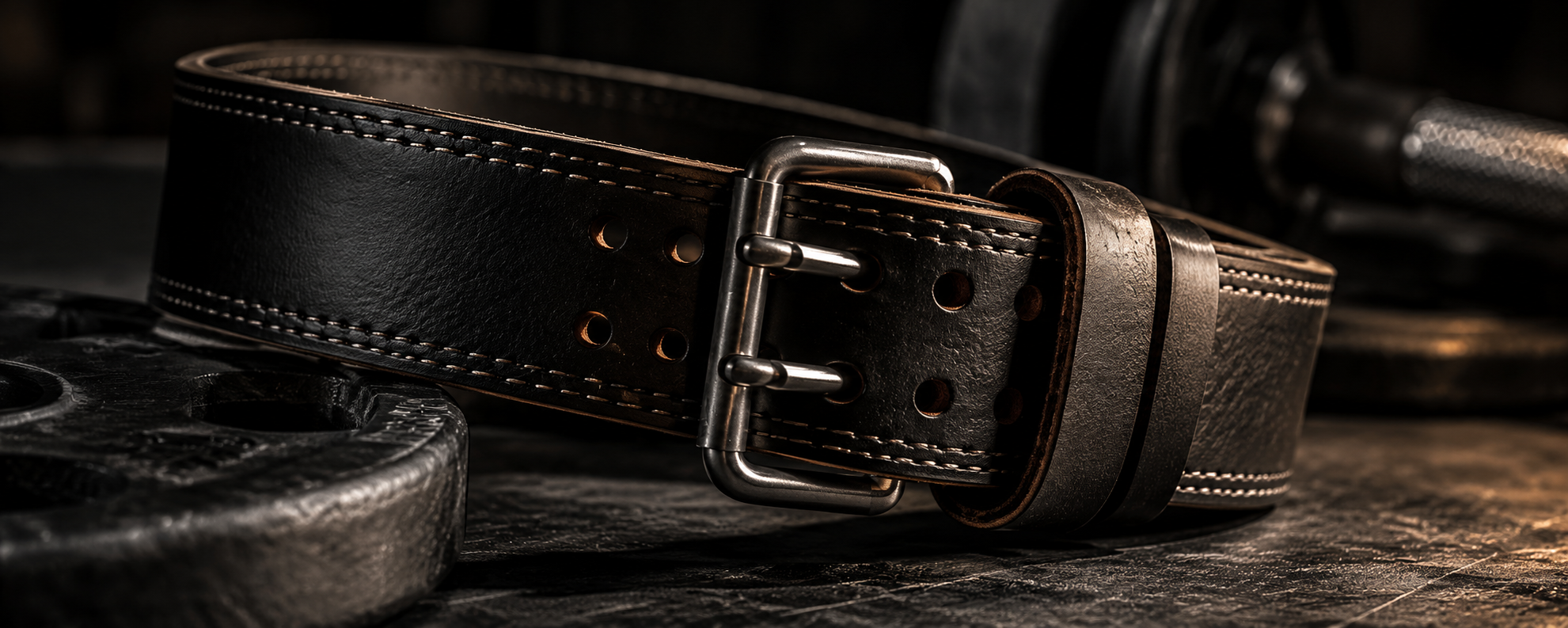
A lifting belt is a long-term part of your training kit, so the fastening system deserves as much attention as the colour or logo. Lever and prong belts offer two different ways to secure the belt. The useful comparison is how each one fits your routine.
Lever belts: a repeatable closure
A lever closure makes opening and closing the belt straightforward once the fit is set. On a conventional fixed-position lever, changing the fit usually means repositioning the hardware. Adjustable lever designs also exist, so check the actual mechanism rather than assuming every lever works the same way.
When comparing samples, ask to see the lever open, close and release. Look at how the hardware sits against the belt and whether the supplier provides assembly and adjustment instructions. A product photograph alone cannot show how the closure feels in use.
Prong belts: adjustment through the buckle
A prong buckle fastens through a selected hole in the belt. You can choose a different hole when you put it on, without repositioning a fixed lever assembly. Hole spacing, the buckle shape and how easily the strap feeds through the keeper are practical details worth checking.
For a brand building its first collection, a clear close-up of the buckle and adjustment holes is more useful than calling the belt “professional” without explaining the design.
Compare the whole belt, not only the buckle
- Dimensions: request the finished width, thickness and usable size range.
- Materials: confirm the outer layer, inner lining and construction rather than relying on a broad “leather” description.
- Finish: inspect stitching, edges, holes and hardware attachment points.
- Sizing: follow the product-specific measuring guide; trouser sizes are not a substitute for the belt’s size chart.
- Instructions: include clear fitting, adjustment and care information with the product.
Which closure belongs in your range?
If your customers value a closure they can open and close at a preset fit, a lever design is worth sampling. If they want to change the selected fastening hole directly, compare a prong design. Neither choice removes the need to test the complete product and communicate its specifications honestly.
For competition use, buyers should check their federation’s current equipment rules and approval requirements before ordering. A belt should not be marketed as competition-approved without evidence for the exact model.
Build a sample around your customers
Before placing a bulk order, agree on the closure, materials, dimensions, size chart, logo placement and packaging. Review a physical sample and record any changes before production.
Explore SZELBERI products or discuss a custom belt project with our team.
Further reading: Rogue lever assembly guide and Pioneer’s buckle comparison. Mechanisms vary by model.