

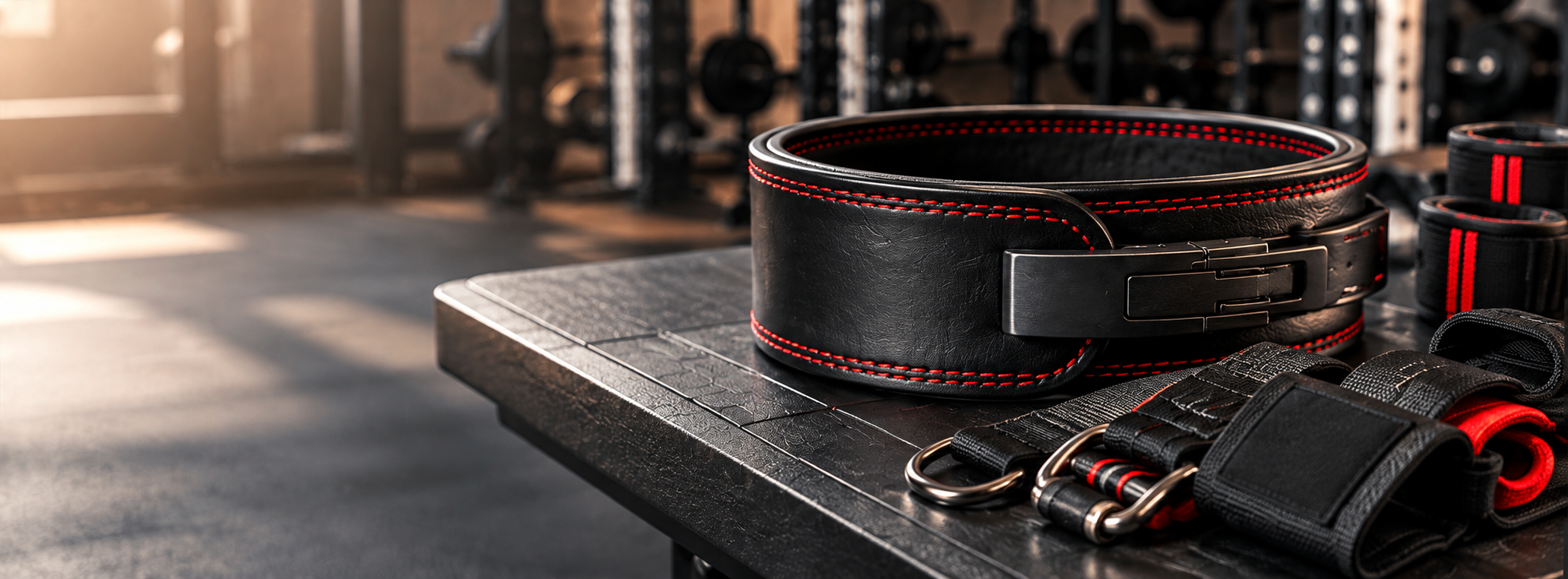
A leather lifting belt spends time in contact with sweat, chalk, clothing and the inside of a gym bag. A simple care routine starts with identifying its materials and following the instructions for that exact belt. Smooth leather, suede, coatings and synthetic linings should not automatically receive the same treatment.
1. Check the care instructions first
Keep the manufacturer’s care information with your purchase details. Before applying a cleaner or conditioner, check whether it is recommended for the outer finish and lining. More treatment is not always better: Eleiko, for example, states that its vegetable-leather belts do not require special treatment. That guidance applies to its own products, not to every belt on the market.
2. Let moisture dry naturally
After training, take the belt out of a closed gym bag and allow it to dry naturally at room temperature. Adidas gives this room-temperature drying advice for its leather weightlifting belt. Avoid treating a radiator, hair dryer or strong direct heat as a shortcut.
Store the belt only when it is dry, in a clean place where the buckle will not scrape other equipment. Keep drinks and cleaning chemicals separate from your lifting kit.
3. Keep cleaning gentle and material-specific
Start by removing loose surface dust with a soft, dry cloth. If the manufacturer permits damp wiping, use a lightly damp cloth rather than soaking the belt, then let it dry naturally. Do not assume that a household spray, bleach or a product intended for shoes is suitable for your belt.
Suede and coated surfaces may need different care from smooth unfinished leather. If you are unsure about a stain or cleaning product, ask the supplier before using it and follow any spot-testing instructions they provide.
4. Inspect the closure and construction
Use your care routine as a chance to check the buckle, lever, fasteners, adjustment holes, stitching and edges. Look for loose parts, distorted hardware, damaged holes or seams that are separating. Stop using a belt with a damaged closure and contact the manufacturer for guidance.
For a lever design, follow its assembly instructions when checking or adjusting the hardware. Do not replace fittings with improvised parts or alter the belt’s holes without manufacturer guidance.
5. Add clear care information to your own range
If you sell private-label lifting belts, ask your manufacturer for care instructions that match the approved sample. Specify the outer material, lining, hardware and finish in your product records. A useful care card explains cleaning, drying, storage and who to contact if a component needs attention.
Review that card whenever the material or construction changes. Reusing generic leather-care instructions across every product can leave customers with advice that does not suit the belt they bought.
Make care part of the product
A clear product description and a practical care card help customers understand what they own. Contact SZELBERI to discuss specifications and packaging for a custom lifting-belt range, or browse our products.
References: Eleiko care information and adidas leather weightlifting belt support. Always follow the instructions supplied with your specific product.